
Hero MotoCorp, Honda Motorcycles, Scooters India, TVS, Honda India, Toyota Kirloskar Motor, Ford, Nissan, Ashok Leyland are all giving the Auto Expo a miss this time.

Maruti Suzuki, Hyundai, Mahindra and Toyota reported low single-digit sales growth for the month owing to weak market sentiment

There are a whopping 10 sedans slated for a launch in India this year. Rajesh Karkera/Rediff.com gives the lowdown.
The strike, however, had no impact on production of auto majors Maruti Suzuki India, Hero MotoCorp, Honda Cars India, Mahindra & Mahindra, Tata Motors and Hyundai Motors India as their plants in various parts of the country functioned normally.

Passenger vehicle market leaders Maruti Suzuki and Hyundai on Saturday reported a decline in wholesales in December 2021, although homegrown majors Tata Motors and Mahindra & Mahindra reported growth, amid semiconductor shortage continuing to impact production. Other manufacturers Nissan and Skoda also reported an increase in December 2021 sales although Honda Cars India witnessed a decline last month. The country's largest carmaker Maruti Suzuki India (MSI) reported a 4 per cent fall in wholesales to 153,149 units in December 2021 as against 160,226 units a year ago.

The two-wheeler segment is, however, still far from its H1FY19 peak of 9.7 million units

Passenger vehicle majors like Hyundai, Tata Motors, M&M, Toyota Kirloskar and Honda on Wednesday reported growth in domestic sales in August riding on festive sentiments, although market leader Maruti Suzuki posted a decline amid a semiconductor shortage affecting the industry. The country's largest carmaker Maruti Suzuki India Ltd (MSIL) reported domestic sales at 110,080 units, as compared to 116,704 units in the same month last year, down 6 per cent. "Sales volume of the company in August 2021 was affected due to electronic components shortage.

With a new chief executive officer (CEO) at the helm, the country's largest two-wheeler maker Hero MotoCorp is now looking to cut flab and move towards a leaner organisation. It has launched a voluntary retirement scheme (VRS) for its staff as it aims to make the organisation 'agile and future-ready'. Recently, the company's erstwhile chief financial officer (CFO) Niranjan Gupta was elevated as CEO.

Auto majors, including Maruti Suzuki India, Hyundai and Tata Motors, on Sunday reported high double-digit growth in their domestic passenger vehicle sales in July riding on stabilisation of macro-economic factors and better consumer sentiments. Similarly, Honda, Nissan, MG Motor and Skoda also reported healthy growth in their sales last month leveraging on improved market mood amid prevailing lower coronavirus infection rate, despite supply constraints of semi-conductors. The country's largest carmaker Maruti Suzuki India's (MSI) domestic sales increased by 39 per cent to 1,41,238 units last month as against 1,01,307 units in July 2020, the company said in a statement.

The new form will only require a complainant to mention the product and GST identification number of the seller

The challenges of transition to stricter emission norm BS-VI from BS-IV and compliance to new safety norms thereby making vehicles costlier are lurking around the sector.

Falling margins, high inflation pitting workers against management.

India is a market for low-priced cars with low running costs. The global majors don't have models that fit the bill; only Maruti and Hyundai have successful entry-level models, observes T N Ninan.

Select metal stocks rebounded while power stocks extended losses after SC verdict on coal block allocations.

The company had launched the Yaris in May 2018 at a price range of Rs 8.75 lakh and Rs 14.07 lakh (ex-showroom), competing with the likes of Honda City, Hyundai Verna and Maruti Suzuki Ciaz. However, it didn't have a robust response in the market, clocking a cumulative wholesales of around 19,800 units.

Passenger vehicle wholesales in India rose by 14.16 per cent in August to 2,15,916 units, driven by pent-up demand, industry body SIAM said on Friday. According to the latest data by the Society of Indian Automobile Manufacturers, passenger vehicle wholesales stood at 1,89,129 units in the same month last year.

Poor contract workers often have little or no access to safety equipment or health benefits in factories.

SoftBank-backed Ola Electric took the wraps off its maiden e-scooter offerings -- Ola S1 and S1 Pro -- for a commercial launch on Sunday. With prices starting from Rs 99,999 (excluding state government incentives, registration fee, and insurance cost), the Bhavesh Aggarwal-founded firm said the e-scooters are designed and engineered in India for the world and will deliver the best scooter experience to the consumer. He suggested that after 2025, sale of petrol-powered two-wheelers should not be allowed.

Buying a car, particularly a diesel-powered one, is set to pinch the customers' pockets even more from the next financial year, as the second phase of Bharat Stage VI (BSVI) emission norms kicks in. The rules require cars to be compliant with real driving emission (RDE) norms, which measure pollutants emitted by cars while they are being driven on the road, unlike in a laboratory test. The norms may increase the cost of producing diesel vehicles by nearly Rs 75,000 to Rs 80,000, and petrol-powered ones by Rs 25,000 to Rs 30,000, analysts said.

Major automakers, including Maruti Suzuki, Hyundai, Tata Motors, Mahindra & Mahindra, Kia, Toyota and Honda, on Thursday reported healthy growth in passenger vehicles sales in June, recovering from the disruptions induced by the second wave of COVID-19. The country's largest carmaker Maruti Suzuki India (MSI) posted total sales of 1,47,368 units in June, up from 46,555 units in May. Its domestic dispatches to dealers last month stood at 130,348 units, up from 35,293 units in May, as easing of COVID-related restrictions helped the auto major to dispatch more units to dealerships.

That means a manufacturer looking at a market like India needs to decide whether small, cheap cars or small, expensive cars or both will work better for them, says Pavan Lall.

India must integrate more with East Asia by getting into regional trade arrangements, lower its tariff walls, and improve the quality of its workforce, suggests T N Ninan.

Maruti's sales of the compact segment comprising Swift, Estilo, Ritz, Dzire and Baleno went up by 9.9% to 45,579 units
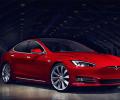
Tesla's Model 3 sedan, scheduled to roll out later this year, will be critical to founder Elon Musk's ambitions to transform his company from a niche car-maker into a mass-market manufacturer.

Cumulative sales of India's top passenger vehicle makers -- Maruti Suzuki, Mahindra and Mahindra, Tata Motors, Honda Cars, and Toyota Kirloskar -- increased to 206,418 units in February over 200,322 units in the same month last year, an increase of 3 per cent.

With its new premium Primus and Ampere NXG, it is targeting buyers seeking a faster and more stylish ride

Passenger vehicle exports from India increased 43 per cent in FY22, with Maruti Suzuki India leading the segment with dispatches of over 2.3 lakh units, as per the latest data by industry body SIAM. The total passenger vehicle (PV) exports stood at 5,77,875 units in 2021-22 fiscal, as compared to 4,04,397 units in 2020-21. Passenger car shipments saw 42 per cent growth at 3,74,986 units, while utility vehicle exports rose 46 per cent at 2,01,036 units during the last fiscal, the data by the Society of Indian Automobile Manufacturers (SIAM) showed.

Vehicle sales across categories registered a decline of 8.62 per cent to 20,86,358 units from 22,83,262 units in May 2018.

Over 22 passenger and commercial vehicle makers and 18 two- and three-wheeler makers will take part amid proximate security.

Maruti Suzuki, Hyundai, Honda Cars and Tata Motors posted single digit growth during the period under review while M&M reported decline in sales.

Reflecting the woes of the Indian automobile industry, the country's car exports remained flat at 550,466 units in 2013-14, during which domestic sales fell for the second consecutive year.

Passenger vehicle wholesales in India increased by 17 per cent in the second quarter of the current fiscal year as buying sentiment improved and companies stocked up to cater to enhanced demand in the festive season, auto industry body SIAM said on Friday. According to the latest data by the Society of Indian Automobile Manufacturers (SIAM), passenger vehicles sales in the July-September quarter increased to 726,232 units from 620,620 units in the same period last year. Similarly, two-wheeler sales during the September quarter this fiscal rose marginally to 46,90,565 units as compared with 46,82,571 units in the same period last fiscal. However, commercial vehicles sales saw a dip of 20.13 per cent at 133,524 units in the quarter under review as compared with 167,173 units in July-September 2019.
Major automobile manufacturers like Maruti Suzuki, Hyundai, Mahindra & Mahindra, Tata Motors and Toyota Kirloskar on Tuesday reported decline in domestic passenger vehicle sales in May compared to the previous month as a spike in COVID-19 cases and lockdowns across various states hit production and dispatches. The country's largest carmaker Maruti Suzuki India (MSI), which shut production from May 1 to May 16 so as to divert oxygen from industrial use for medical purposes, reported domestic dispatches to dealers at 35,293 units last month, down 75 per cent from 142,454 units in April. The company said sales of its mini cars, comprising Alto and S-Presso, declined by 81 per cent to 4,760 units in May as against 25,041 units in April this year.

The industry needs stimuli to help revive consumer demand and conversions.
Data available from top six players - Maruti Suzuki, Hyundai, M&M, Tata Motors, Honda and Toyota - shows an average growth of about 42 per cent for the industry in June

Maruti's exports in May were down 2.4% at 9,089 units

It is the global leader in car sales but in India, is a distant fifth.
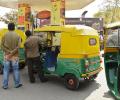
Amid a shift in mobility trends and people increasingly opting for less polluting energy sources, sales of compressed natural gas (CNG) vehicles increased more than 82 per cent in the past five years. A total of 729,902 CNG vehicles were sold in 2022-23 against 400,825 in 2017-18, according to VAHAN Dashboard. Though the increase in sales of CNG-powered vehicles has been significant, their share in overall vehicle sales remains minuscule as is the case with EVs.

Besides their country of origin, General Motors, Ford Motor and Harley-Davidson have another trait in common: all three have failed in India, the world's fifth largest automobile market. All three of them took a tough call to de-prioritise India as a market amid disruption from heightened regulations and sharper focus on capital allocation by the parent.

Maruti will showcase its first concept electric vehicle, the e-SURVIVOR; M&M it's six new EVs, including two futuristic concepts
 © 2026 Rediff.com - Advertise with us - Disclaimer - Privacy Policy - Sitemap - Feedback - About us - Terms of use - Grievances